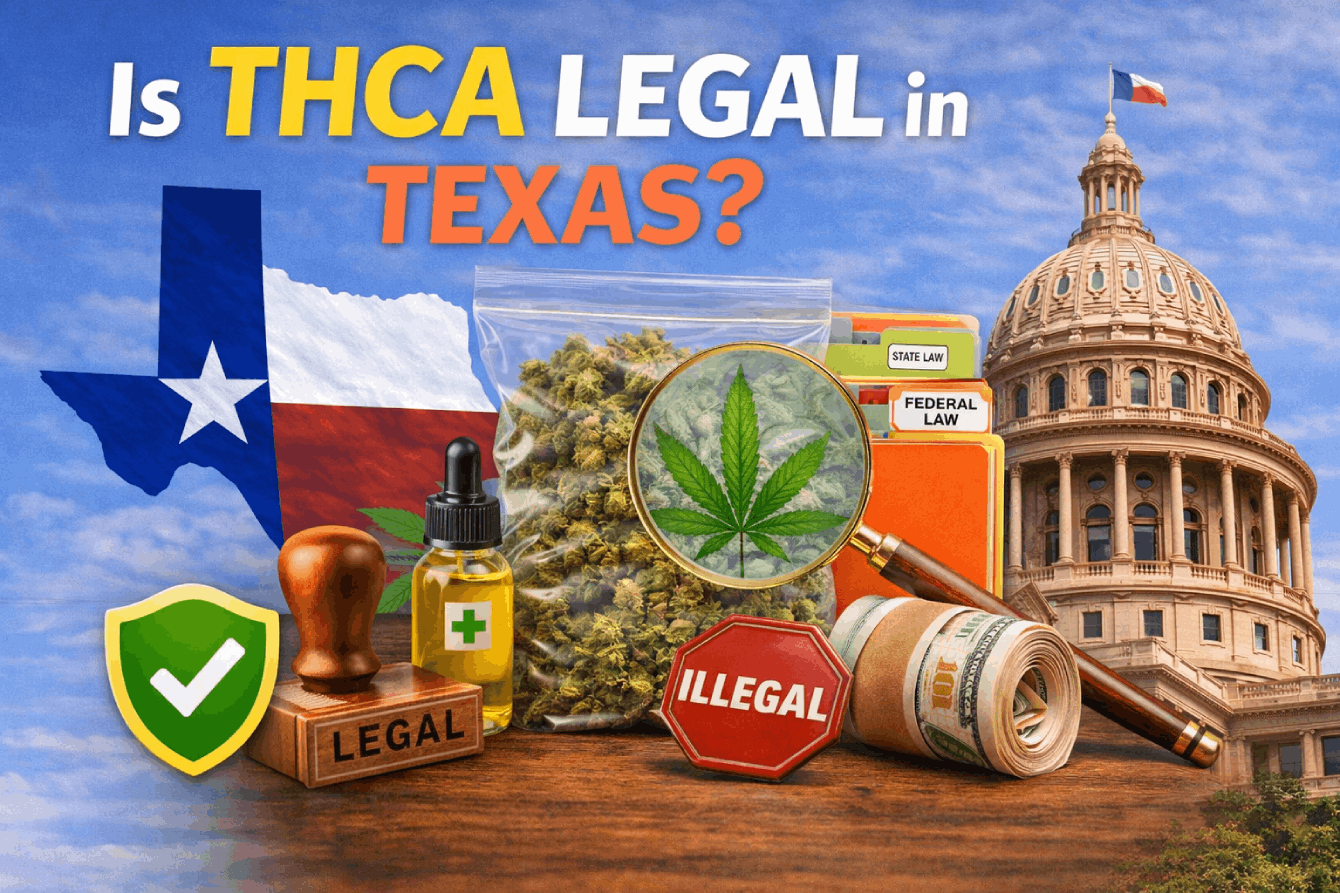
THCA has become one of the most discussed cannabinoids in Texas, leaving many consumers and retailers asking whether these products are still compliant under current hemp regulations. The answer depends on how the product is tested, classified, and interpreted under current hemp regulations.
As Texas continues updating its approach to hemp-derived cannabinoids, understanding is thca legal in texas requires looking at testing standards, product classifications, and evolving compliance requirements. This guide explains the rules, legal considerations, and regulatory factors shaping the Texas THCA market today.
THCA, or tetrahydrocannabinolic acid, is the naturally occurring cannabinoid found in raw cannabis plants. Unlike Delta-9 THC, THCA is non-intoxicating in its raw form. However, when exposed to heat through smoking, vaping, or cooking, THCA converts into Delta-9 THC through a process known as decarboxylation.
This conversion is the primary reason regulators have focused heavily on THCA products over the past several years.
Historically, hemp legality was determined by measuring Delta-9 THC concentration only. Under the 2018 Farm Bill and Texas House Bill 1325, hemp products containing no more than 0.3% Delta-9 THC by dry weight qualified as legal hemp. This created a market where cannabis flower could test below the Delta-9 threshold while still containing significant amounts of THCA.
In many cases, premium THCA flower tested between 20% and 30% THCA while remaining compliant under the older Delta-9-only testing standard. Once heated, those cannabinoid levels could produce effects similar to traditional cannabis flower. This regulatory gap is largely responsible for the rapid growth of the THCA market throughout Texas and other hemp-friendly states.
The question of how THCA is legal in Texas can only be understood by looking at how hemp laws were originally written.
Like many states, Texas initially adopted a hemp framework largely based on federal hemp definitions and Delta-9 THC thresholds:
| Requirement | Previous Hemp Standard |
| Delta-9 THC Limit | ≤ 0.3% by dry weight |
| THCA Included? | No |
| Primary Testing Focus | Delta-9 THC only |
| Hemp Status | Federally and state compliant |
Because THCA was not always included in regulatory calculations, many hemp products and THCA concentrates qualified as legal despite containing significant levels of THCA. Retailers, wholesalers, and manufacturers built entire product categories around this distinction.
This is also the reason many consumers asked why is THCA legal in Texas despite producing effects similar to cannabis after heating. The answer was never that THCA was specifically approved by lawmakers. Rather, the original regulatory framework focused on Delta-9 THC concentration instead of total THC potential.
As regulators became more aware of the issue, enforcement agencies began reassessing how hemp products should be tested and regulated.
Texas regulators argue that measuring only Delta-9 THC does not accurately reflect the intoxicating potential of a product.
Because THCA converts into Delta-9 THC when heated, regulators increasingly view total THC content as a more accurate compliance standard. This shift has become the foundation for recent rule changes affecting hemp-derived products throughout the state.
Key Reasons Regulators Cite:
Industry stakeholders often point out that THCA itself is non-intoxicating prior to heating. However, state agencies generally focus on how products are consumed in real-world scenarios rather than laboratory conditions.
The debate has become one of the most significant compliance issues facing hemp retailers today because it affects flower, THCA prerolls, concentrates, and other cannabinoid categories that previously operated under older testing standards.
The answer to is THCA still legal in Texas depends heavily on how a product is tested, sold, and interpreted under evolving state regulations.
Texas regulators and enforcement agencies have increasingly considered total THC calculations when evaluating hemp-derived products. Under this approach, regulators evaluate the amount of THC a product can potentially produce after decarboxylation rather than measuring Delta-9 THC alone.
The current formula commonly used for compliance calculations is:
Total THC = Delta-9 THC + (THCA × 0.877)
For example, a flower product containing 25% THCA and less than 0.3% Delta-9 THC may appear compliant under older testing methods, but total THC calculations can produce a substantially different compliance assessment.
Under this methodology, many traditional THCA flower products may face compliance challenges when evaluated under total THC calculations.
This regulatory shift has created significant uncertainty throughout the Texas hemp industry, especially for retailers carrying products such as THCA disposables and flower. Various court challenges, temporary injunctions, and regulatory disputes have also contributed to ongoing confusion surrounding enforcement. As a result, businesses should avoid assuming that historical hemp compliance standards still apply today.
Among all hemp categories, whether THCA flower is legal in Texas remains one of the most frequently asked questions.
The challenge is that flower products naturally contain large concentrations of THCA. Premium hemp flower often tests between:
| Cannabinoid Metric | Typical Range |
| THCA Content | 15%-35% |
| CBD Content | 0%-15% |
| Delta-9 THC | Below 0.3% |
| Potential Total THC | Often exceeds 0.3% |
Under older testing methods, many of these products qualified as hemp because Delta-9 THC remained below the legal threshold, a distinction also discussed in our THCA vs THC guide.
For retailers and wholesale buyers, this distinction is critical. A product that previously appeared compliant under Delta-9 testing may now trigger compliance concerns when evaluated under total THC standards.
This uncertainty has encouraged some Texas operators to explore hemp categories with more predictable compliance considerations.
The question of whether it is legal to smoke THCA in Texas introduces another layer of complexity because regulators often distinguish between possession, product classification, and smokable hemp products.
From a compliance standpoint, smokable products have received increased regulatory scrutiny because smoking directly converts THCA into Delta-9 THC, which is one reason consumers often compare products like MAC 1 and other high-THCA cultivars before purchasing. Regulatory discussions surrounding smokable hemp products frequently reference this conversion when evaluating intoxicating potential.
For businesses, the primary concern is not simply whether a product contains THCA. Instead, compliance often depends on:
Product Factors Regulators Evaluate
Because enforcement policies continue evolving, retailers and distributors should avoid treating smokable THCA products the same way they were treated several years ago.
For cannabis and hemp businesses, compliance is increasingly becoming an operational issue rather than a marketing issue.
A modern compliance program should include:
Every batch should undergo third-party laboratory testing that evaluates cannabinoid content and total THC calculations.
Retailers should maintain updated Certificates of Analysis (COAs) for every product sold.
Working with established suppliers reduces the risk of receiving inventory that fails current testing requirements.
Documentation can become critical during inspections, audits, or enforcement actions.
Texas hemp regulations continue evolving. Businesses should regularly review updates from legal counsel and state agencies.
Companies that build compliance systems into their operations typically adapt more effectively than businesses that react only after regulations change.
Consumers often focus exclusively on product potency, but legality and compliance matter just as much.
Before purchasing any THCA product, consumers should actively review:
One common misconception is that a product automatically qualifies as legal simply because it contains less than 0.3% Delta-9 THC. Increasingly, regulators are evaluating total THC rather than Delta-9 alone. That distinction has become one of the most important factors affecting hemp compliance in Texas.
Consumers should recognize that hemp regulations can evolve through legislation, agency guidance, and court decisions. A product considered compliant at one point may face different regulatory treatment as testing standards evolve.
The Texas hemp market continues moving toward stricter compliance standards, clearer testing requirements, and more comprehensive cannabinoid oversight.
Several recent developments suggest regulators are focusing less on individual cannabinoid names and more on overall intoxicating potential. This approach aligns with broader conversations occurring across multiple states and at the federal level regarding hemp-derived cannabinoids and total THC calculations.
For the industry, long-term success will likely depend on transparent testing practices, accurate labeling, and strong compliance systems.
Businesses that prioritize product quality, accurate labeling, and evolving compliance requirements will likely be better positioned as the regulatory environment continues to mature.
So, is THCA legal in Texas? The answer depends on how a product is tested, classified, and evaluated under current hemp regulations. While many THCA products originally entered the market by meeting Delta-9 THC limits, regulators increasingly focus on total THC calculations and a product’s potential intoxicating effects after decarboxylation.
For consumers, retailers, and distributors, compliance now involves more than simply reviewing a Delta-9 percentage. Product testing, Certificates of Analysis, labeling accuracy, and regulatory updates all play important roles in determining whether a product meets current standards. As Texas hemp laws continue evolving, staying informed and prioritizing compliance remains the most reliable way to navigate the THCA marketplace responsibly and reduce potential legal risks.
THCA exists in a complex legal area in Texas because compliance depends on testing standards, total THC calculations, product type, and evolving state regulations. Consumers and retailers should review current laws and product testing results before assuming a THCA product is compliant.
The legality of THCA flower depends largely on how regulators evaluate total THC content. While some products may meet Delta-9 THC limits, they can exceed legal thresholds once THCA is converted into THC through heat.
THCA is the naturally occurring acidic cannabinoid found in raw cannabis plants. Unlike Delta-9 THC, it does not produce intoxicating effects until it is heated through smoking, vaping, or cooking.
THCA products originally entered the hemp market because compliance was based primarily on Delta-9 THC concentration. Since THCA was not always included in calculations, some products qualified as hemp despite containing high THCA levels.
Smoking THCA products receives greater regulatory attention because heat converts THCA into Delta-9 THC. The legality often depends on product compliance, testing methods, and how regulators interpret current hemp laws.
Total THC is a compliance calculation that combines existing Delta-9 THC with the amount of THC that can potentially be created from THCA after decarboxylation. Many regulators now use this measurement when evaluating hemp products.
Third-party laboratory testing helps verify cannabinoid content, total THC levels, product consistency, and regulatory compliance. Accurate Certificates of Analysis are important for both consumers and businesses operating within the hemp industry.
Yes. Hemp regulations continue evolving at both the state and federal levels. Retailers, distributors, and consumers should monitor regulatory developments because compliance standards can change as lawmakers and agencies update cannabis policies.
Consumers should review product labeling, cannabinoid profiles, third-party lab reports, total THC calculations, and retailer credibility. Understanding these factors helps reduce compliance concerns and provides greater transparency regarding the product being purchased.
Premium dessert cultivars rarely stay popular for long, yet the...
A high THCA percentage alone doesn’t guarantee premium shelf space....
Two THCA flower jars can display nearly identical cannabinoid percentages,...



Sign up for exclusive wholesale offers, new product alerts, bulk pricing updates and more.

No spam. Unsubscribe anytime. ❤️